
PLAYER DEVELOPMENT · for every player in your program
Every player knows what to work on next.
Your players see the concepts, plays, and language your program is teaching.
Then they train the skills behind them between practices. The work at home connects to what happens on the field.
THE ASSIST
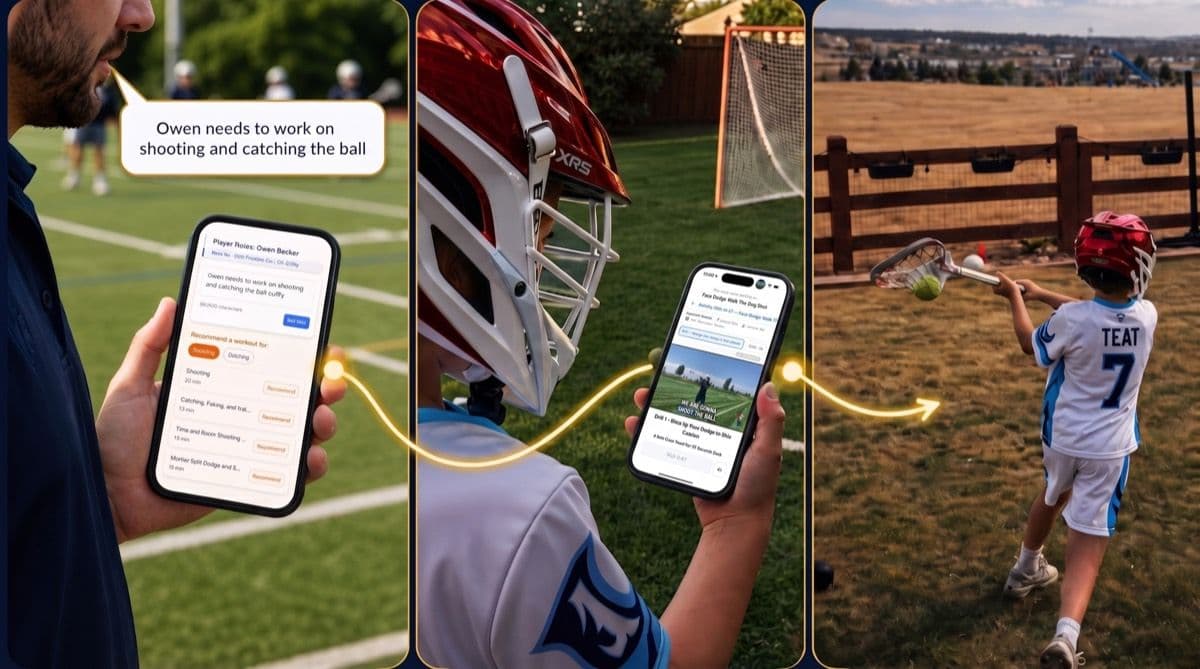
What your coach sees at practice becomes the player’s next step.
A coach notices the gap and recommends the right workout.
It goes straight to the player’s phone.
The player knows why he is doing the work.
It connects to the play, skill, or concept his team is learning that week.
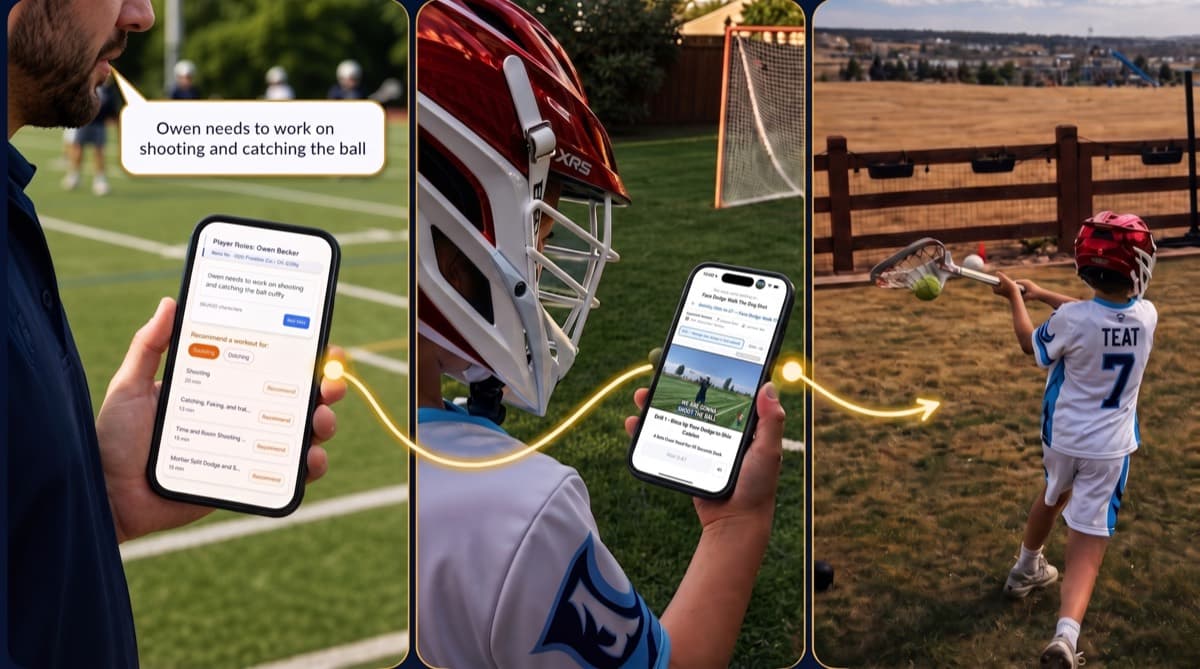
A workout waiting on the player’s dashboard, from his coach → he opens it that night → the kid gets the fix the same week.
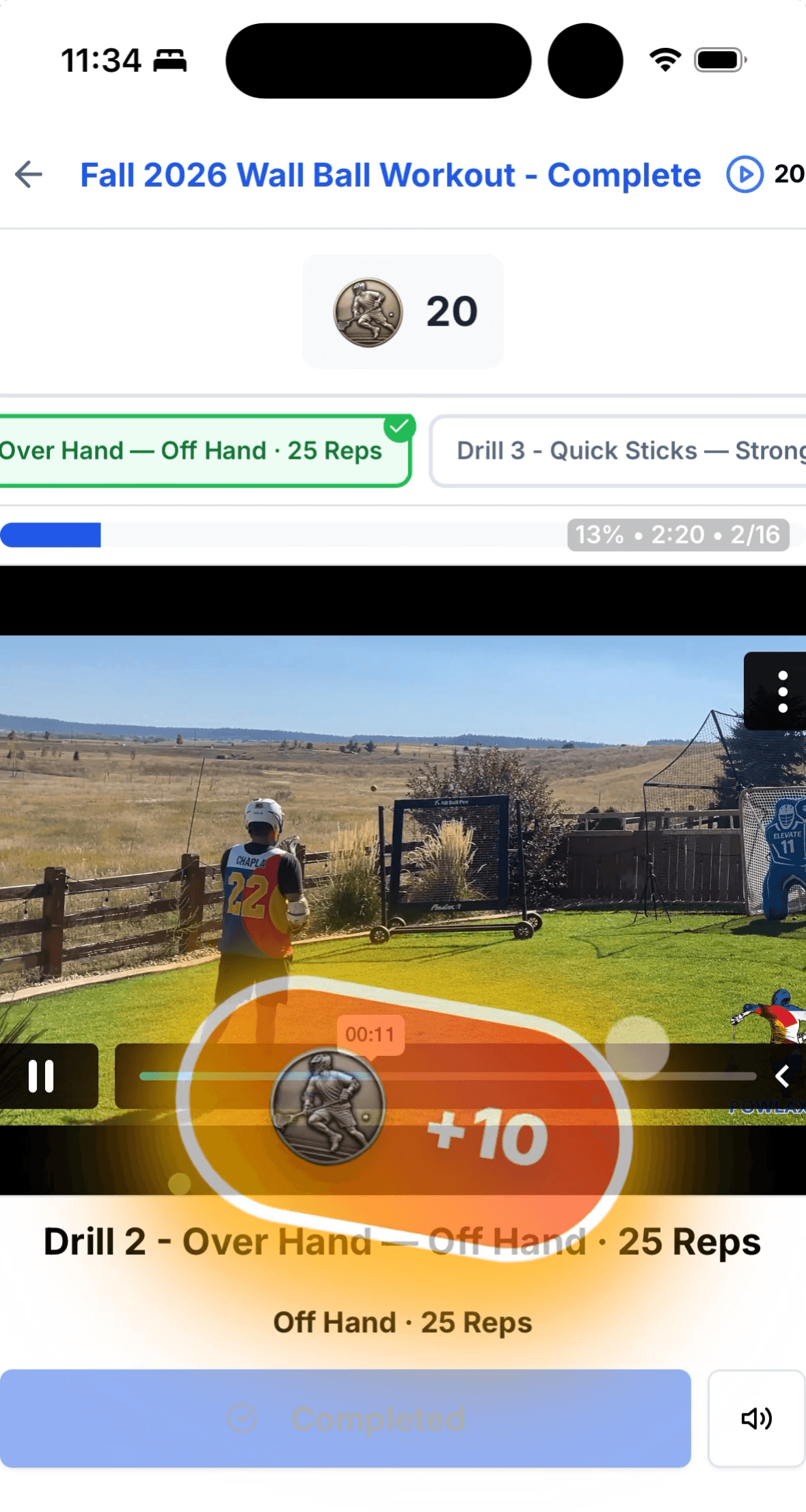
The drill video and the progress strip → he finishes the drill and checks it off → reps happen without a coach standing there.
THE WORKOUT
Players know exactly what to do when practice ends.
Short, guided workouts make improvement easy to start.
The player follows the video and works with the space and equipment he has.
He checks it off when he finishes.
Five or ten minutes becomes real progress instead of another reminder to “go practice.”
THE PATH · the work has a reason
Every player understands why the work matters.
The playbook shows what your team is asking players to do, the language they should use, and the decisions they need to make on the field.
Then the Academy connects that expectation to the work: attack, midfield, defense, shooting, dodging, footwork, and more.
Players are not doing random drills. They can see how the work prepares them to execute the next play in your system.
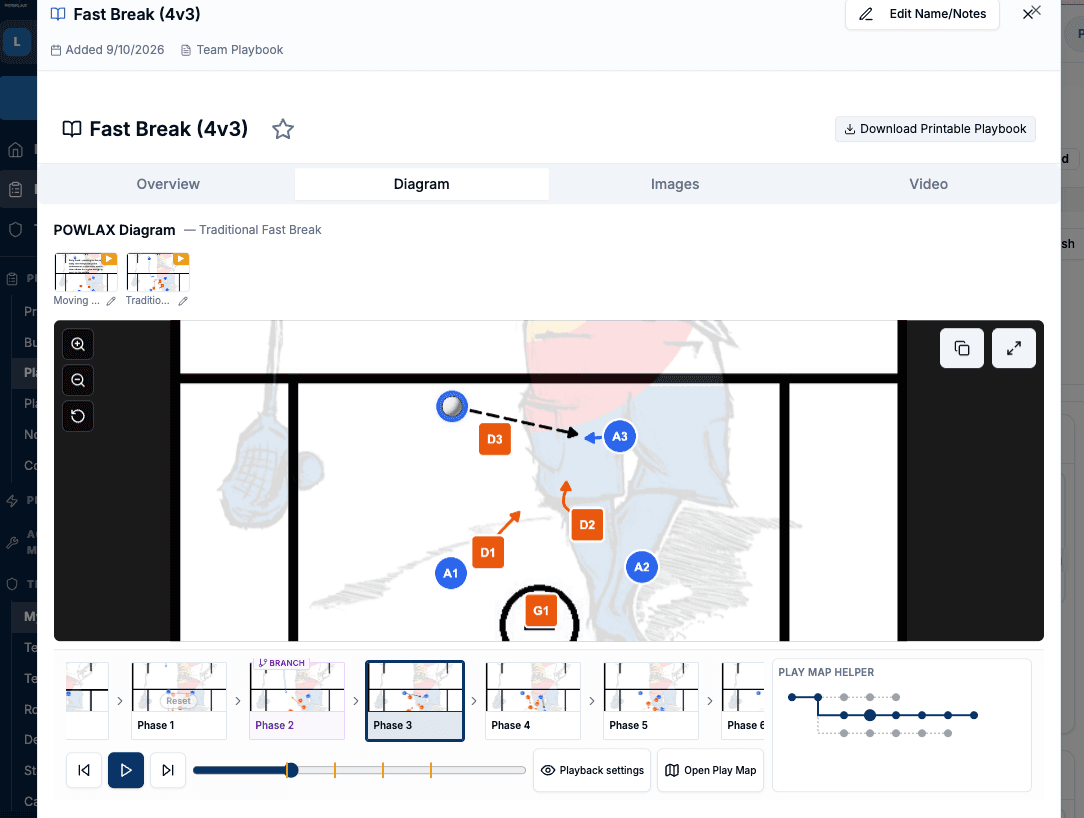
The fast break his coaches drew, phase by phase → he sees the decision it asks him to make → he trains the skill behind it before the game.
After doing a Solid Start workout, my son used the move at practice and was stoked—he felt like he’d unlocked a secret code.
THE NEXT STEP · for your whole program
Help every player turn practice into game-day confidence.
Your coaches provide the direction.
The Academy gives players a clear way to prepare and practice. What they learn at home connects to what they do on the field.
Looking for training for one player? Visit Skills Academy Individual.